Rust, how an anti-raid sky settlement survives a wipe
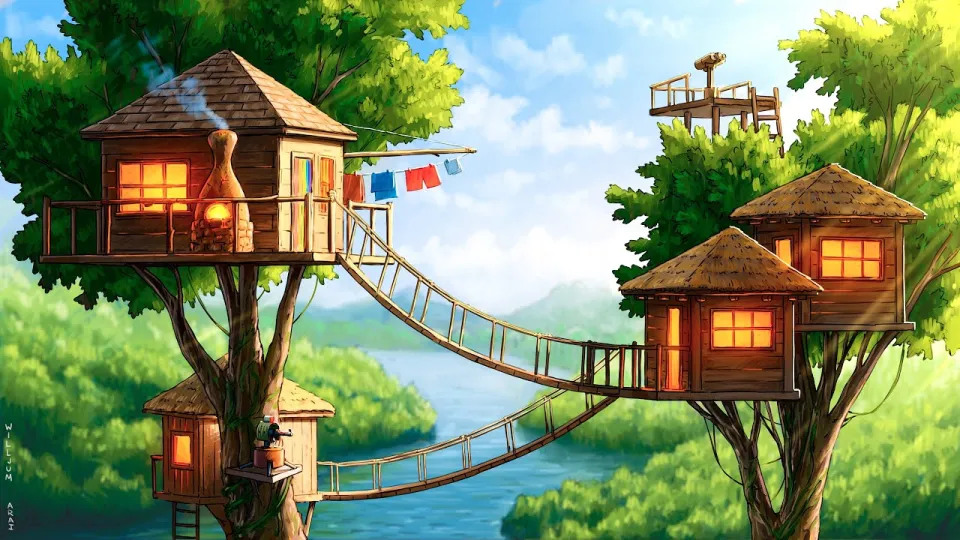
Video: I Built an anti raid sky settlement in Rust...
Need articles like this for your video? They help promote it on YouTube and Google — order them in the Telegram bot @sat_sit_bot. Articles with your video embedded are written and posted by the bot itself — on popular topical sites (no ads). Your first 50 articles are free.
· based on the channel Willjum
Key takeaways
- A sky settlement in Rust is a cluster of elevated bases connected by stairs, ramps and towers rather than one ground-level compound.
- Raid cost rises with verticality: raiders must carry ladders, climb or blow through multiple floors before reaching the main loot room.
- Splitting loot across several small elevated bases beats one large vault when the server is full of offline raiders.
- Elevated builds pay for themselves in upkeep: tool cupboard taxes scale with structure count, so every extra tower needs stone or metal.
- Willjum's channel builds solo survival stories around unusual bases rather than pure PvP highlights, and the anti-raid sky settlement is one of them.
A sky settlement in Rust is a group of small bases built high off the ground — on rocks, cliffs or stacked foundations — and linked by stairs, ramps and towers instead of one flat compound. The point is not to be unraidable, because nothing in Rust is, but to make every raid expensive: raiders must bring ladders, climb exposed routes and blow through several small structures before they find anything worth the sulfur. Support for the channel and its longer survival stories is available through Willjum's Patreon page, where the weekly videos are funded.
What an anti-raid sky settlement actually is
An anti-raid sky settlement is a base plan built around vertical distance rather than wall thickness. Instead of one armored core surrounded by honeycomb, you get a handful of compact bases placed above the normal raiding line, each holding a fraction of the loot.
Key properties of the layout:
- Height as a filter. Ground raiders plan for doors and walls. A base that starts 20–30 meters up forces them to carry ladders, build temporary stairs, or waste explosive ammo on structural support.
- Many small targets instead of one big one. Four small bases with a box each are a worse raid than one base with four boxes, because the attacker has to commit resources four times.
- Cheap outer shells. Wood and stone in the elevated sections, metal and armored only where the real loot sits.
- Visible routes. Stairs and bridges are the weak point; if they are the only way up, they are also the only way in.
In Rust, the practical ceiling matters: building blocked zones, tool cupboard radius and stability limits all shape what you can stack. A sky settlement usually means 3–6 floors of usable height on natural terrain, not a floating fortress.
How the sky settlement defends against raids
The defense of a sky settlement is economics, not invincibility. Every raid in Rust has a sulfur cost, and verticality multiplies that cost faster than walls do.
- Climb time is exposure time. A raider on a ladder is a stationary target with no cover. On a busy server, that is often enough to get them shot before they reach the top.
- Explosive cost per floor. Each additional floor of honeycomb or a separate elevated base adds rockets or C4 to the bill. Ten rockets spent on a decoy tower is ten rockets not spent on your main loot.
- Split storage. Spread sulfur, scrap, guns and components across separate elevated bases. A successful raid on one node should not end your wipe.
- Decoy rooms. An obvious, poorly defended room near the top is worth building if it absorbs a raid group's first breach.
- Upkeep pressure. The counterweight: every extra foundation, wall and floor increases the tool cupboard tax. A sprawling sky settlement can cost thousands of stone per day, so build only what you can feed.
A useful rule of thumb from general Rust raiding math: a stone wall costs far less to build than it costs to break, so cheap layers high up are efficient. Armored cores are for the one room you cannot lose.
Building steps for a solo or duo player
The build order matters more than the blueprint. A sky settlement that is half finished when the first raid lands is worse than a boring 2x2.
- Pick terrain with a natural choke. A rock formation, cliff edge or monument overlook gives you height without paying for it in structures.
- Place the tool cupboard first and check the radius. The cupboard defines what you can build and who can build against you; on elevated terrain the radius often clips awkwardly.
- Build the smallest viable core. A 1x1 or 1x2 with an armored door and a single large box is the seed. Everything else is optional.
- Add elevated satellite bases one at a time. Each one gets its own cupboard, its own small stash and its own cheap shell.
- Connect with stairs you can destroy. Wooden steps that you remove when offline are better than a permanent bridge that hands raiders a free path.
- Stockpile before you expand. Two days of upkeep in the cupboard before you add a third tower.
For solo players the limit is time, not ideas. Three small elevated bases maintained properly outperform six half-empty ones.
What the video adds to the picture
Willjum's anti-raid sky settlement video is a survival story rather than a build tutorial, and that framing is the useful part. The channel's format — a solo wipe narrated from first spawn to final raid — shows how a base plan survives contact with real servers: failed raids, lost gear, rebuilds and the slow accumulation of upkeep.
The video also landed alongside a milestone the community responded to heavily: the channel passed two million subscribers, and the intro thanks viewers directly. The comments are dominated by people who have never played Rust and watch weekly anyway, which says something about the format — the base is the plot device, not the product.
If you want the raw mechanics rather than the story, treat the video as a demonstration of sequencing: gather, secure a core, expand upward, spread risk. If you want the story, the base is the antagonist.
Common questions from viewers
Most recurring doubts about sky settlements come from people who watch Rust content without playing it, plus a few from players who tried the idea and lost the base.
"Isn't a high base just a bigger target?" It is a more visible target, but visibility and vulnerability are different things. Raiders choose targets by expected profit per sulfur, and an elevated base with spread loot usually scores badly on that calculation.
"Does this work on a solo-only server?" Yes, and it works better there. Solo raiders rarely carry enough explosives for multiple elevated structures, so the split-loot principle does most of the work.
"What about upkeep?" This is the real failure mode. A sky settlement that outgrows your farming routine decays or gets abandoned, and an abandoned base is free loot. Build to your playtime, not to your ambitions.
"Can I do it without a group?" Yes, but expect a slower wipe. The advantage of the layout is that it tolerates being incomplete, which suits players who log in for a few hours at a time.
Useful links
- Willjum on Patreon — support the weekly survival videos
- Willjum on Twitch — live streams and longer sessions
- Willjum on Twitter — updates and schedule
- Creative Commons Attribution 4.0 — license referenced for the music used in the video
Bottom line
The anti-raid sky settlement is a risk-spreading strategy, not a magic shield: height, small separate bases and cheap outer layers make a raid cost more than the loot is worth. It suits players who can keep up with tool cupboard taxes and who accept that any base in Rust is temporary. Willjum's video is a good demonstration of the idea in motion, told as a solo wipe story rather than a step-by-step guide. If the format is what keeps you coming back, supporting the channel on Patreon is the direct way to do it.
Source: I Built an anti raid sky settlement in Rust... · Markdown version
Questions & answers
Can a sky settlement in Rust really stop an offline raid?
No base stops a determined offline raid, and a sky settlement does not claim to. What it does is raise the sulfur cost and the exposure time for the attacker, so many raid groups pick an easier ground-level target instead. The realistic goal is to make your base a bad investment, not an impossible one.
How much upkeep does an elevated base cost?
Upkeep scales with the number and tier of structures you place, so a multi-tower sky settlement can run into thousands of stone per day. The practical approach is to keep satellite bases wood or stone and reserve metal and armored for one small core. If you cannot farm the upkeep for two days in advance, do not add another tower.
Is this build viable for a solo player with limited playtime?
Yes, with a smaller footprint. A solo player should aim for two or three compact elevated bases with split loot rather than a sprawling cluster. The layout tolerates being unfinished, which fits players who log in for a few hours at a time and cannot defend a large compound.
Do I need to play Rust to enjoy this kind of content?
Not at all — a large share of the audience for these survival videos has never launched the game. The videos work as weekly stories about building, losing and rebuilding, with the base as the plot. Watching them is also a low-cost way to learn base layouts before trying them yourself.